
Renewable-Powered Cooling for Mission-Critical Server Rooms
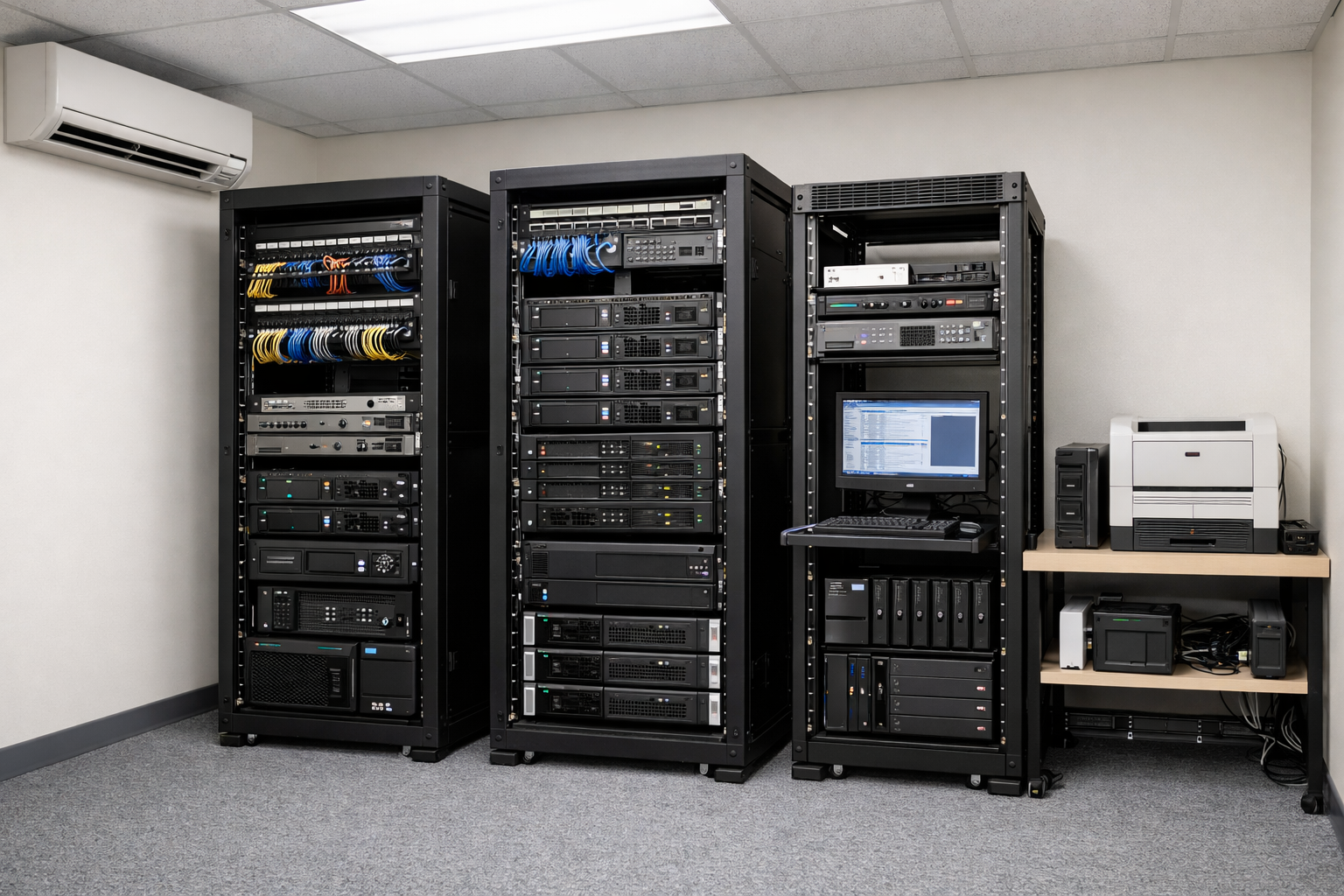
Server rooms and edge data environments require continuous, stable cooling to protect uptime, data integrity, and hardware lifespan. Sun Ice Energy delivers a solar-powered thermal energy storage solution using patented PCM (Phase Change Material) Ice Wall technology to ensure 24/7 temperature stability with minimal grid dependency. The result: resilient, cost-controlled, and low-carbon IT cooling.
CORE VALUE
Keep your servers cool, stable, and secure — without relying entirely on the grid. Sun Ice delivers a clean, cost-efficient cooling solution that protects uptime and significantly reduces operational energy costs. Our intelligent Ice Wall thermal battery ensures your server room remains at optimal temperature around the clock, powered primarily by solar energy, with the grid serving only as backup.
Why Renewable Cooling for Server Rooms?
Cooling can represent 30–50% of total IT facility energy consumption. Traditional systems operate in real time and are fully exposed to peak electricity tariffs and grid instability. By integrating solar PV with PCM-based thermal energy storage, facilities gain energy resilience, peak load reduction, and predictable cooling costs.
- Reduce peak demand charges through thermal load shifting
- Improve energy efficiency and optimize cooling performance
- Enhance uptime resilience during grid instability
- Support ESG reporting and low-carbon IT infrastructure goals
Uptime protection – Reduced OPEX – Zero CO₂ emissions
HOW IT WORK

Generate & Cool
On-site solar panels drive high-efficiency chillers to meet real-time cooling demand while simultaneously charging the Ice Wall thermal battery.
Discharge On Demand
When solar power is unavailable—at night, during cloudy conditions, or peak tariff periods—the Ice Wall seamlessly releases stored cooling capacity to maintain stable server room temperatures.
Continuous Protection
Even during grid outages or demand spikes, stored thermal energy ensures uninterrupted cooling, minimizing the risk of downtime, overheating, or equipment failure.
Technical Performance Highlights
- Latent heat storage via controlled PCM freeze–melt cycles
- Temperature stability engineered for mission-critical environments
- Peak load reduction and demand charge optimization
- Reduced compressor cycling and improved HVAC lifespan
- Integration-ready with BMS and DCIM monitoring systems
The Bottom Line for You
- Reduce cooling energy costs to near-zero (project-dependent)
- Guarantee stable server room temperatures — protecting uptime and equipment lifespan
- Virtually eliminate the carbon footprint of IT cooling
- Insulate operations from energy price spikes and grid instability
Proof in Action
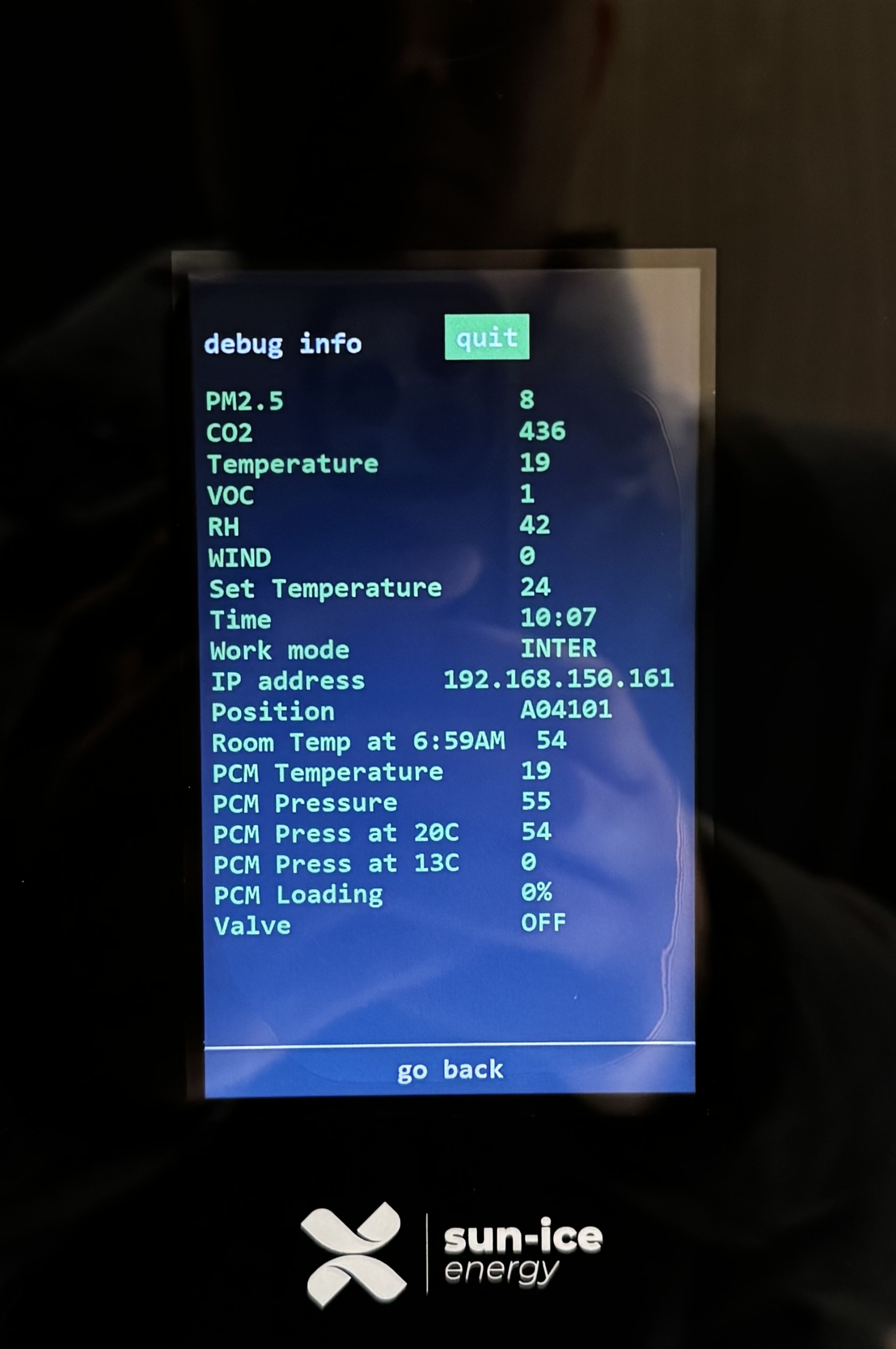
- Live dashboard shows solar generation, Ice Wall charge status, and server room temperature stability.
- Operational data demonstrates consistent cooling performance and dramatic reductions in grid power consumption.
Brochures and Downloads
F.A.Q
The system is engineered with enough storage capacity to handle most cloudy periods.
For large buildings, the grid can supplement the system if needed.
Sun‑Ice is designed for new buildings with strong insulation and high‑performance envelopes.
The better the insulation, the lower the cooling load — and the more efficiently Sun‑Ice units operates.
We work closely with architects to optimise:
- Building orientation
- Insulation levels
- Shading and solar control
- Ventilation strategy
- Thermal mass and envelope performance
This integrated design approach ensures the building requires as little cooling as possible.
Sun‑Ice systems are currently deployed across Asia, with global expansion underway.
It depends on the building size, insulation quality, and cooling load.
During design, we work with the architect to size the solar array and thermal energy storage buffer so that solar provides the primary cooling energy year‑round.
Sun‑Ice uses solar energy to freeze a thermal energy storage buffer during the day.
That stored cooling is then released to keep the building comfortable at night or during cloudy periods.
No electrical batteries are required when used with Grid support.
Protects uptime for small businesses and offices.


