
Cold Storage Powered by the Sun. Guaranteed Stable Temperature, 24/7.
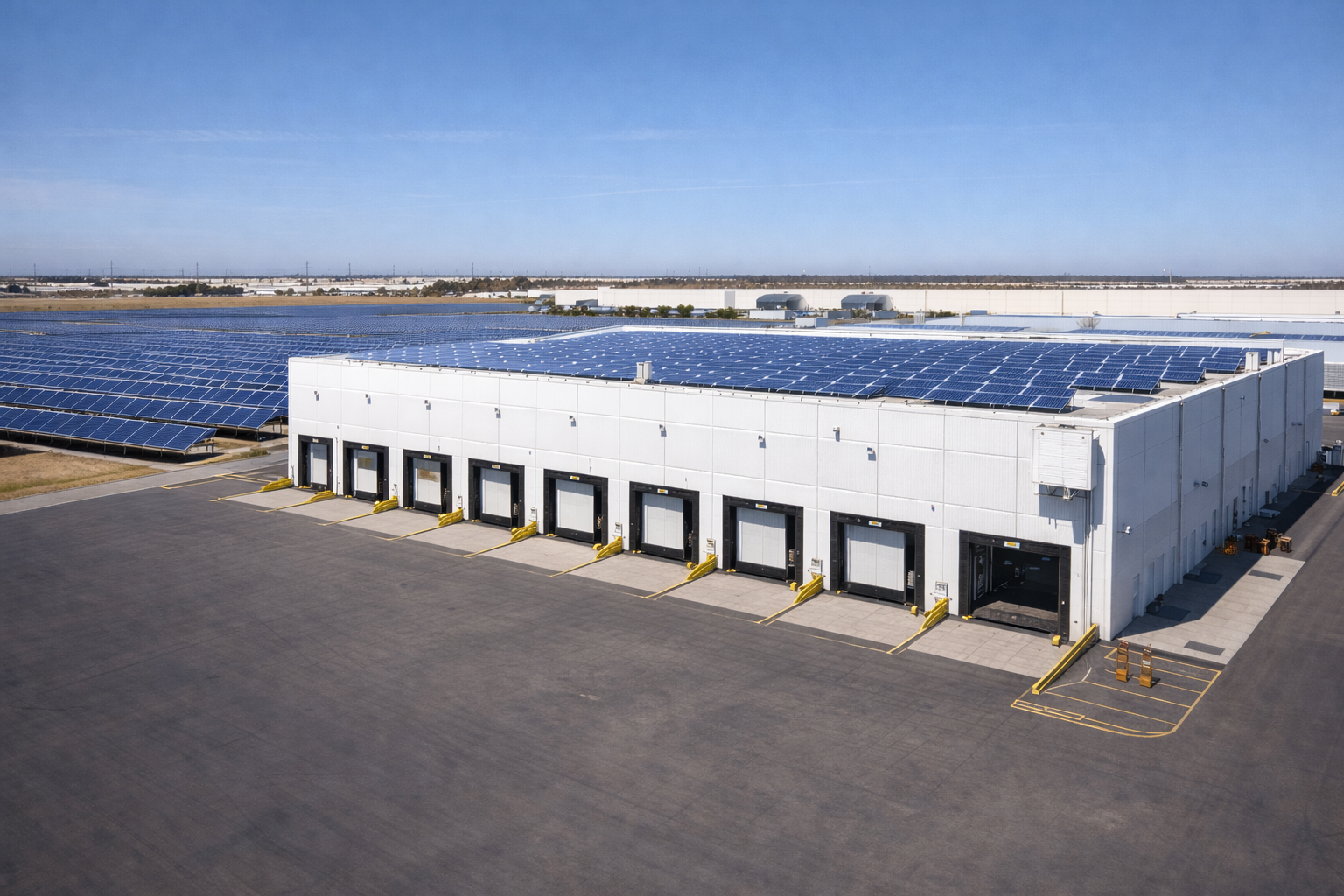
Cold storage facilities are among the most energy-intensive industrial assets, operating 24/7 with strict temperature stability requirements. Sun Ice Energy transforms conventional refrigeration into a solar-powered thermal energy storage system using our patented Ice Wall — a water-based thermal energy buffer. The result: lower operating costs, reduced grid dependency, and guaranteed temperature stability.
CORE VALUE
Protect your inventory and your bottom line. Sun Ice transforms cold storage into a clean, cost-controlled asset powered primarily by solar energy. Operating costs and carbon footprint are significantly reduced, with the electrical grid acting only as a silent backup for ultimate peace of mind.
Why Solar Thermal Storage for Cold Chain?
Refrigeration can represent more than 50% of total facility energy consumption in cold chain logistics. By storing renewable energy as cold through controlled PCM freeze–melt cycles, facilities gain energy resilience, peak load reduction, and long-term cost stability.
- Reduce peak demand charges through thermal load shifting
- Stabilize operating costs against volatile electricity pricing
- Enhance refrigeration resilience during grid instability
- Support ESG, sustainability, and net-zero carbon goals
Near Zero Energy with Temperature stability (±0.5 °C).
Proven Performance: Shanghai Pilot
- 35 m³ cold storage room maintained at 4°C
- Daily electricity savings: 40 kWh
- Annual energy cost savings: €4,500
- Investment payback: 3 years or less
- CO₂ reduction: 9 tonnes per year
HOW DOES IT WORK

Generate & Cool
Your on-site solar panels serve as the primary power source. This renewable electricity simultaneously: Powers the chillers to handle real-time cooling demand (countering infiltration heat, equipment loads, door openings, etc.) and Charges the Ice Wall thermal storage buffers by freezing the Ice walls, building a reserve of stored cooling capacity

Discharge On Demand
When solar power is unavailable—at night, during cloudy periods, or peak tariff windows—the Ice Wall seamlessly releases stored cooling energy to maintain precise temperature stability, minimizing or eliminating the need for grid electricity.
Technical Performance Highlights
- Latent heat storage using using 0C Ice Walls freeze–melt cycles
- Temperature stability target: 4±0.5°C, 24/7/365
- Peak load reduction and demand charge optimization
- Improved refrigeration efficiency and reduced compressor cycling
- Integration-ready with Building Management Systems (BMS)
The Bottom Line for You
- Reduce cooling energy costs to near-zero — freeing capital for growth
- Virtually eliminate the carbon footprint of refrigeration — meet sustainability mandates with ease
- Guarantee rock-solid temperature stability (±0.5°C) 24/7/365 — protect your inventory from spoilage
- Insulate your business from energy price spikes — achieve predictable, stable operating costs
Live Data & Performance Transparency
- Solar generation
- Ice Wall charge status
- Internal temperature stability
- Grid power consumption levels
Applications Within Cold Chain
- Refrigerated warehouses
- Food processing and logistics centres
- Pharmaceutical cold storage
- Temperature-sensitive industrial environments

Brochures and Downloads
F.A.Q
Yes — but only during a major renovation where the building is taken back to its structural frame with state of the art insulation and ventilation.
Sun‑Ice is primarily designed for new construction, where it can be fully integrated into the building from the start.
Sun‑Ice systems are currently deployed across Asia, with global expansion underway.
Sun‑Ice is designed for new buildings with strong insulation and high‑performance envelopes.
The better the insulation, the lower the cooling load — and the more efficiently Sun‑Ice units operates.
We work closely with architects to optimise:
- Building orientation
- Insulation levels
- Shading and solar control
- Ventilation strategy
- Thermal mass and envelope performance
This integrated design approach ensures the building requires as little cooling as possible.
Sun‑Ice works best in hot, sunny climates where cooling demand is high.
It performs well in tropical, subtropical, and desert regions.
Sun‑Ice is designed so that solar is the primary source of power for cooling.
- Off‑grid containers: 100% solar‑powered with no grid connection. Solar also recharge auxiliary batteries for LED lighting and ventilation.
- Large buildings: Solar provides most of the cooling energy, with the grid acting as a backup during extended low‑sun periods. Surplus solar electricity can be exported back to the grid. Making the building energy positive.
Powered by the Sun. Guaranteed Stable, 24/7


